Challenges of creating compelling pitches and prototypes
21 July 2026
If you’re in sales, you are constantly confronted with the challenge of delivering a compelling pitch. Closing contracts (and hitting targets) means tailoring your message, building your champions, and getting those all important signatures. In B2B tech, that process also includes a compelling demonstration.
Most GTM tools operate at scale for internal consumption. For instance, using Clay for lead scoring, automated outbound, message sequencing. This is powerful: finding and engaging with your customers is a big deal. Once you’ve won that first meeting, though: then what? What did you give your prospect that they can take away? There are relatively few tools for making things for your customer’s consumption.
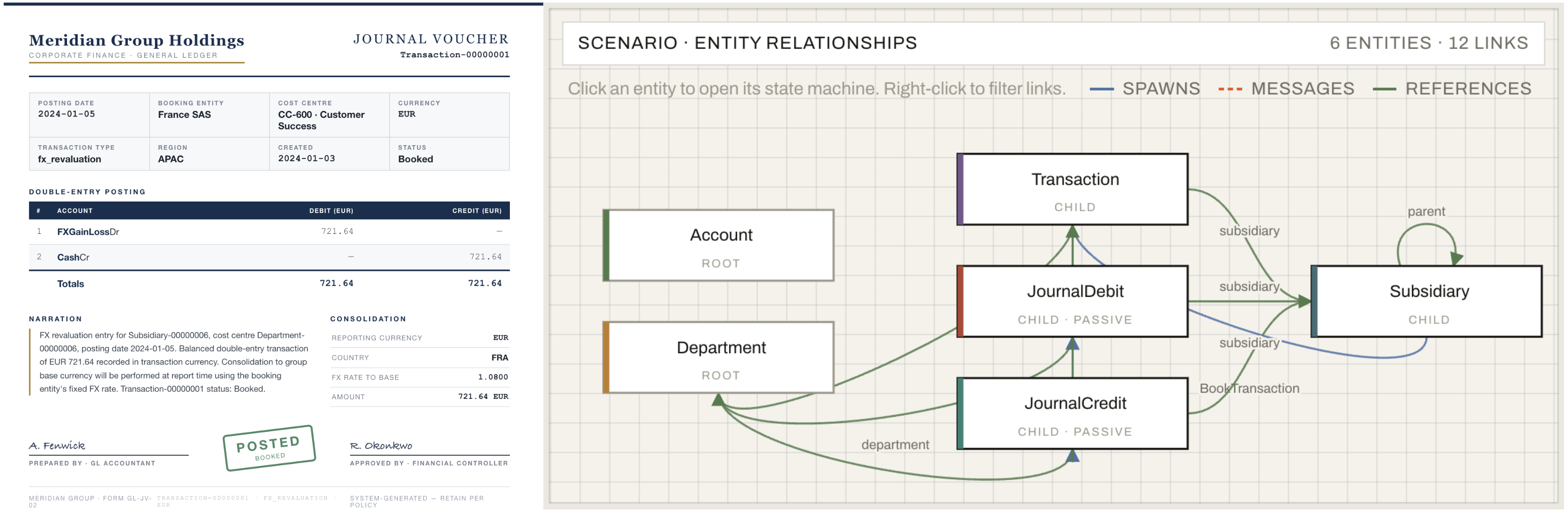
Mock Machines is aimed at a specific challenge: quickly building real, tailored prototypes that you can put in your customers’ hands. By combining AI with a simulation engine, you can instantly create entire backends as a foundation for showing off how your product could work in their business.
A good, working prototype solves all sorts of communications problems. We struggle to tailor our demos for various reasons:
- Engaging your audience
- Staying credible under fire
- The time it takes to build
- Differentiating your product in the AI age
- Scaling a GTM function
The hard work of building relationships and champions hasn’t gone away with AI. Let’s take a closer look at how those challenges persist:
Engagement
Some audiences are patient, most are not. You have very little time to show that you are relevant. The most common tactic is to re-brand your content. Presentations are updated with palettes and logos that align to the buyer, for instance. Simple and obvious, perhaps, but important. The best examples of this are where you share something that they can share when you’re not in the room.
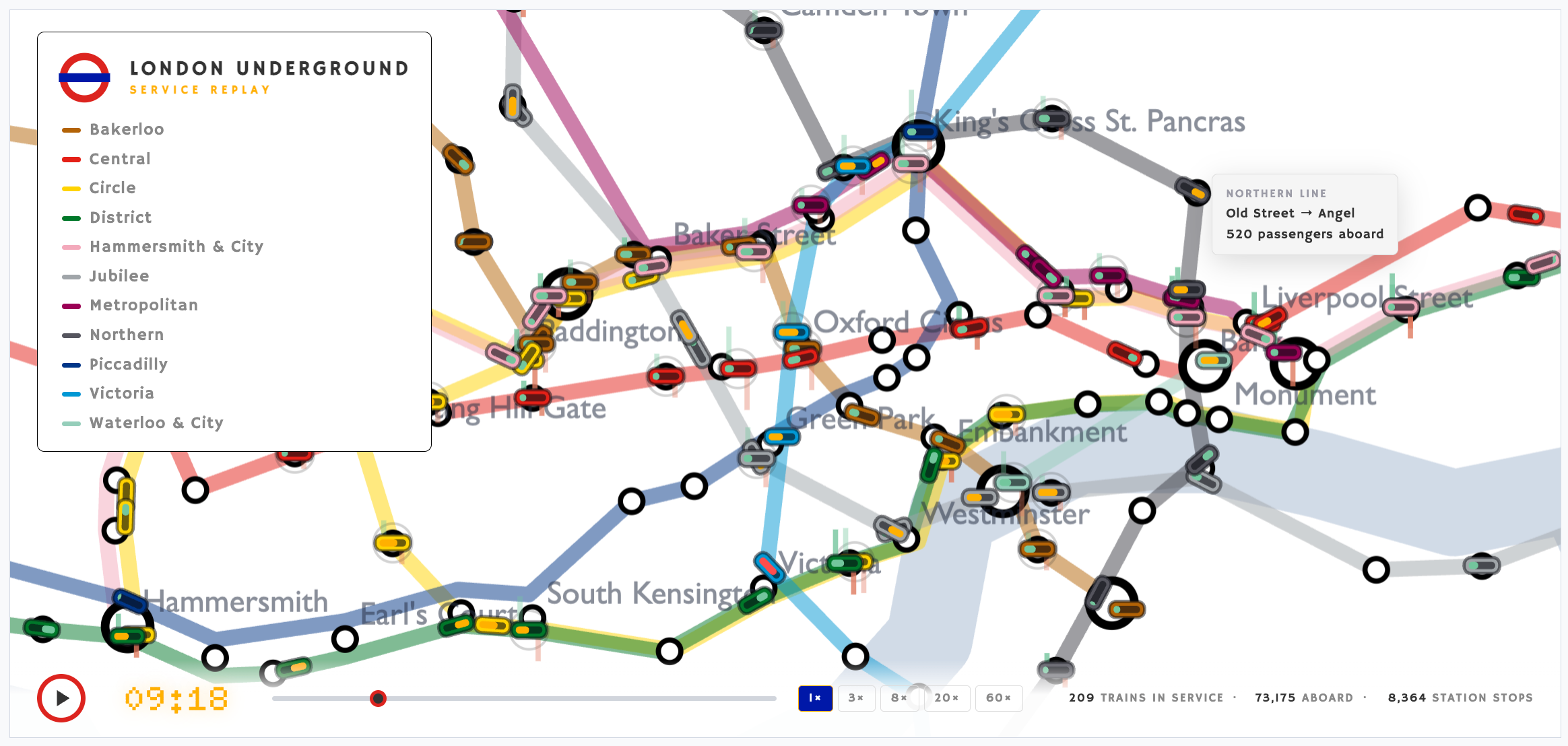
Business has shared papers and presentations since forever. These days, the best examples are often custom landing pages where it is instantly clear that the content is dedicated to the viewer. For example, an animated London Underground simulation cannot be mistaken for anything else. It’s not just the branding: every single label, every single datapoint, is crafted specifically to the audience.
Credibility
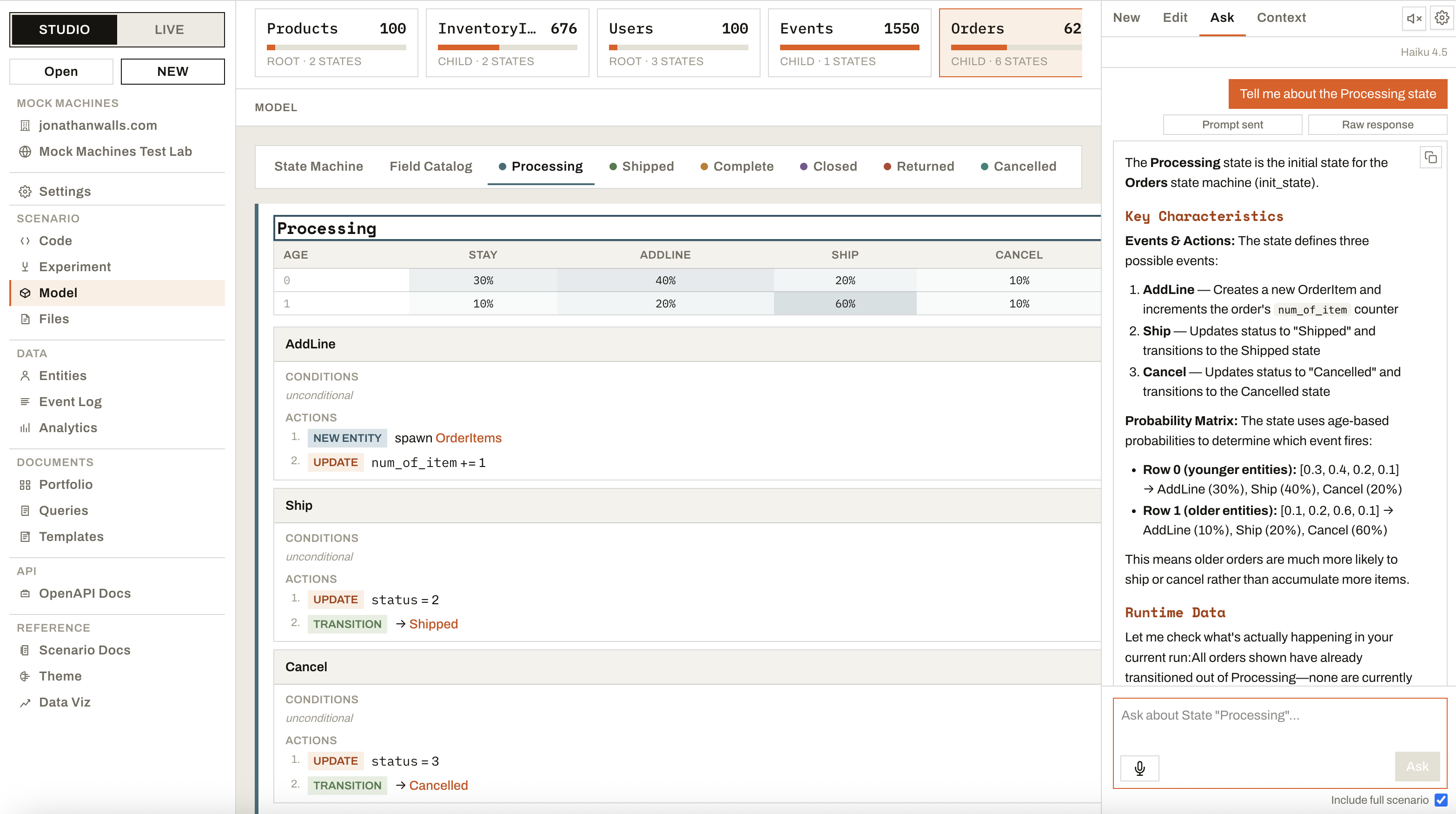
The initial “wow” factor of an engaging presentation is valuable. It quickly leads to the next level: is your content deep enough to survive interrogation over a long meeting? I’ll use Looker’s ecommerce dataset as an example of depth, since Google publishes this as an open dataset. It has several interrelated tables (“referential integrity”), and also what I’ll call “process integrity”. The data doesn’t just “join up”. It represents a real business process of orders, distribution centres, shipments, customers. Things like timeframes and demographics are realistic. The narrative is baked in.
That kind of depth is incredibly valuable to maintaining credibility. It holds an audience’s attention. A shallow demo falls apart: the links break, using the filters gives blank screens, the content is meaningless to the audience. Ever had a demo that was more talk than show? That can simply be because it lacks depth.
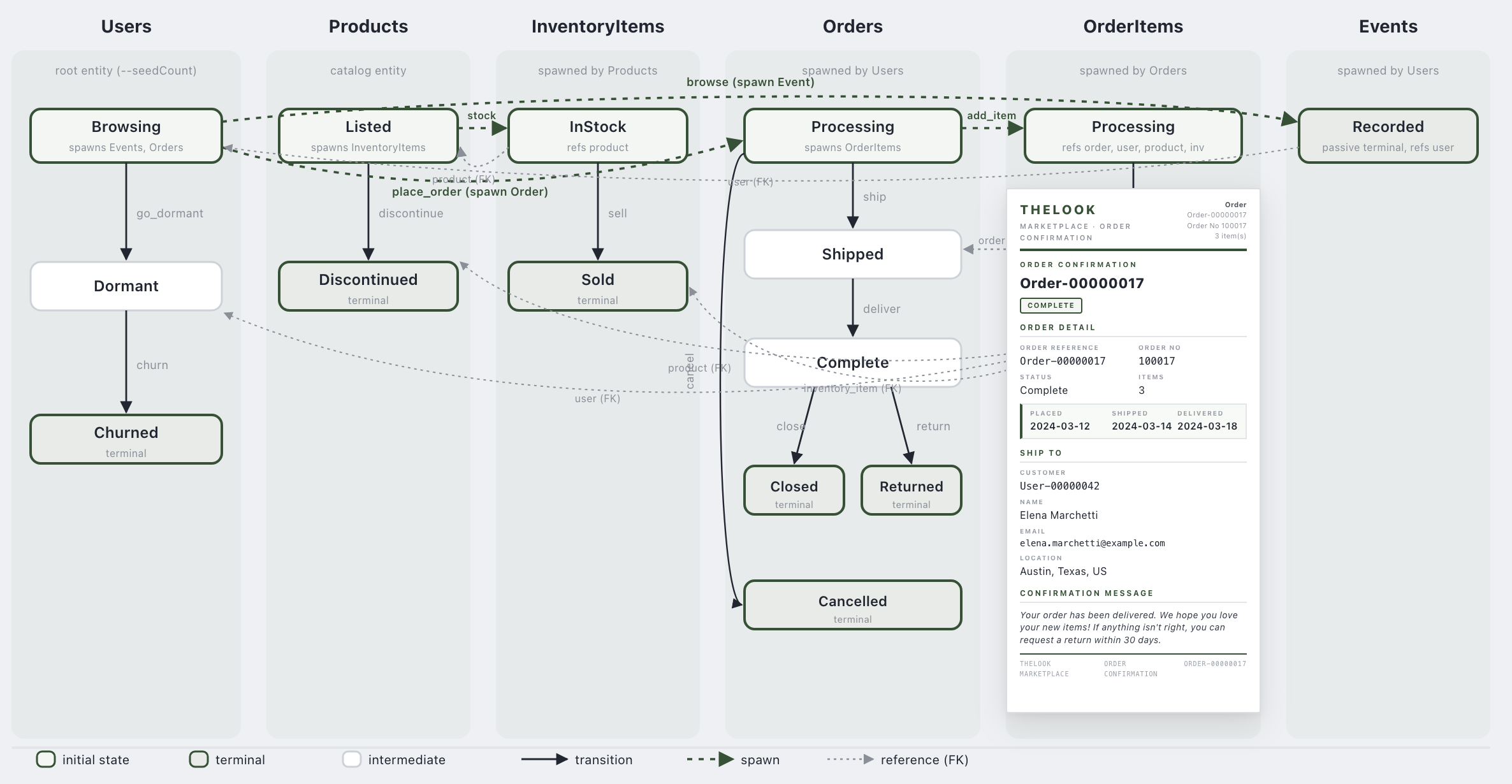
Mock Machines creates deep datasets on the fly - here is The Look as a simulated model complete with flow diagrams and mocked up documents for all the entities.
Time to build
The challenge with “depth” is the sheer time it can take to build. Often there is a practical constraint of 1-2 days: you’re in a sales cycle, or running a workshop, or participating in a hackathon. In GTM, there are competing demands for your time: some work is reserved for well qualified opportunities. Often the really engaging demos don’t happen until you’ve got agreement to run a proof-of-concept or pilot, signed an NDA, and received some data.
I’ve built many custom demos that got us through the door and landed the first win at a new account. The ones that really paid their way kept the opportunity alive from first meeting to close, enduring changes of sponsorship and shifting management priorities.
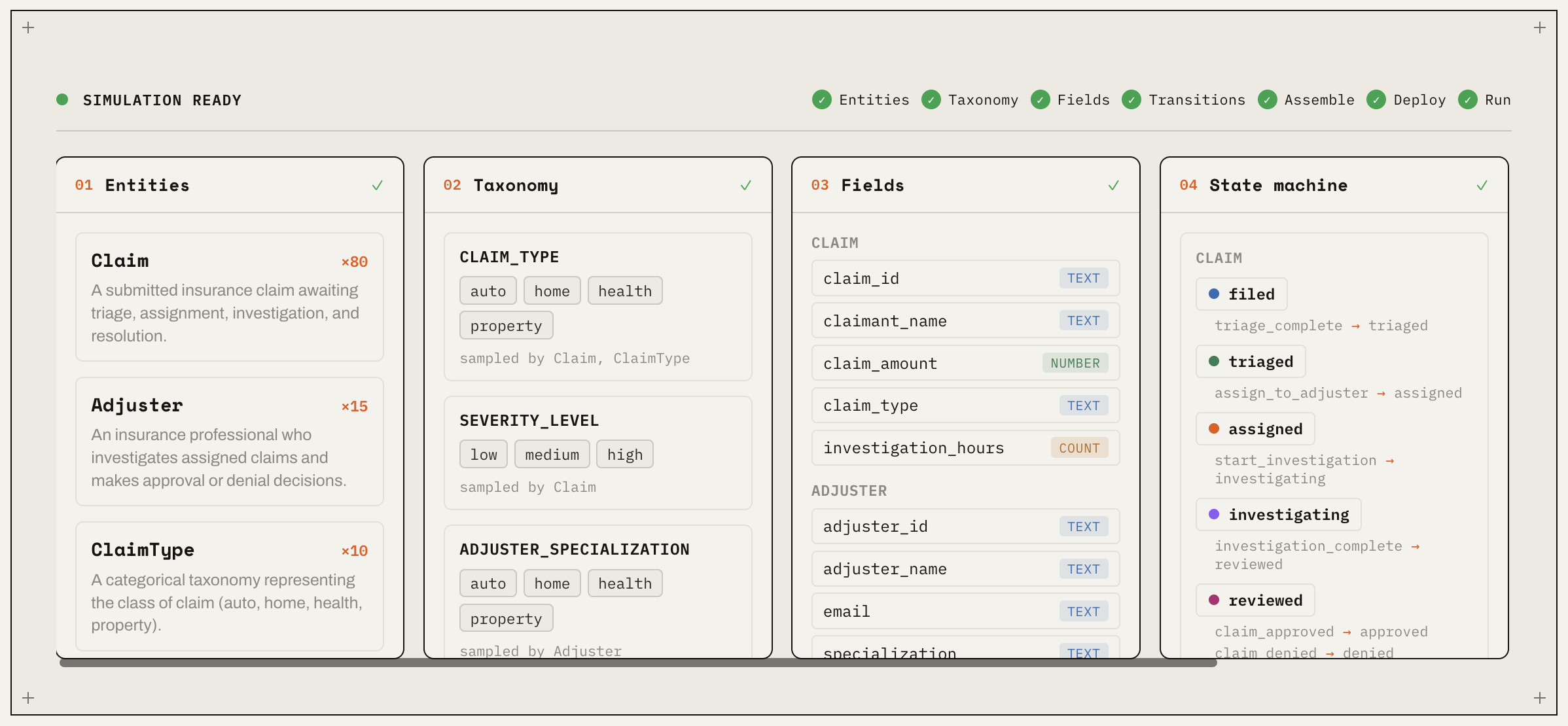
Every customer facing engineer has their favourite examples. You remember them because you just don’t have the time to give every opportunity that much attention. It’s because of those past successes that I really appreciate that it’s now possible to create an entire dataset and interactive API from just filling in a prompt.
Differentiation
I appreciate that many people will be thinking that with Claude Code or Codex, spinning up a new prototype or dataset is now fast and easy. On the one hand, yes: you can get a lot done, very quickly. On the other hand: what AI can do for you, it can do for everybody. Apps, docs, websites, presentations can now all be created in minutes. That alone won’t differentiate you against the competition.
In B2B, I think that three things will hold true at least for a few years:
AI-assisted building is the baseline. Audience expectations of tailored pitches will only increase. Basic use of AI to tailor your content to your audience is table stakes.
Specialist tools built on AI can help you differentiate. A Forward Deployed Engineer can build a handy dataset with a single prompt using Claude Code. With the right tools, in the same amount of time, they could instead build an entire backend.
LLMs aren’t the whole game. State-of-the-art synthetic data generation uses tabular diffusion models. Many situations suit world-building and simulation, currently a hot research topic e.g. Yann LeCun’s Advanced Machine Intelligence startup. It will be exciting to see how the AI leaders enrich their offerings over time.
For those with deals to close right now, Mock Machines combines LLMs with a small, super-fast simulation engine to provide a level of depth that you can’t get from Claude Design.
Scaling a GTM function
Assume for a moment that the ideal GTM team wants to tailor every step of its funnel to the prospect, including the demo. The real challenge is not “how can I build a deal-winning demo”, but “how can my entire team build deal-winning demos on every deal, on every new vertical-focused marketing campaign, even on every outbound message”.
Imagine if this could be routine:
- A marketing team kicks off a new campaign, for which purpose a new demonstration is built to support some engaging video content.
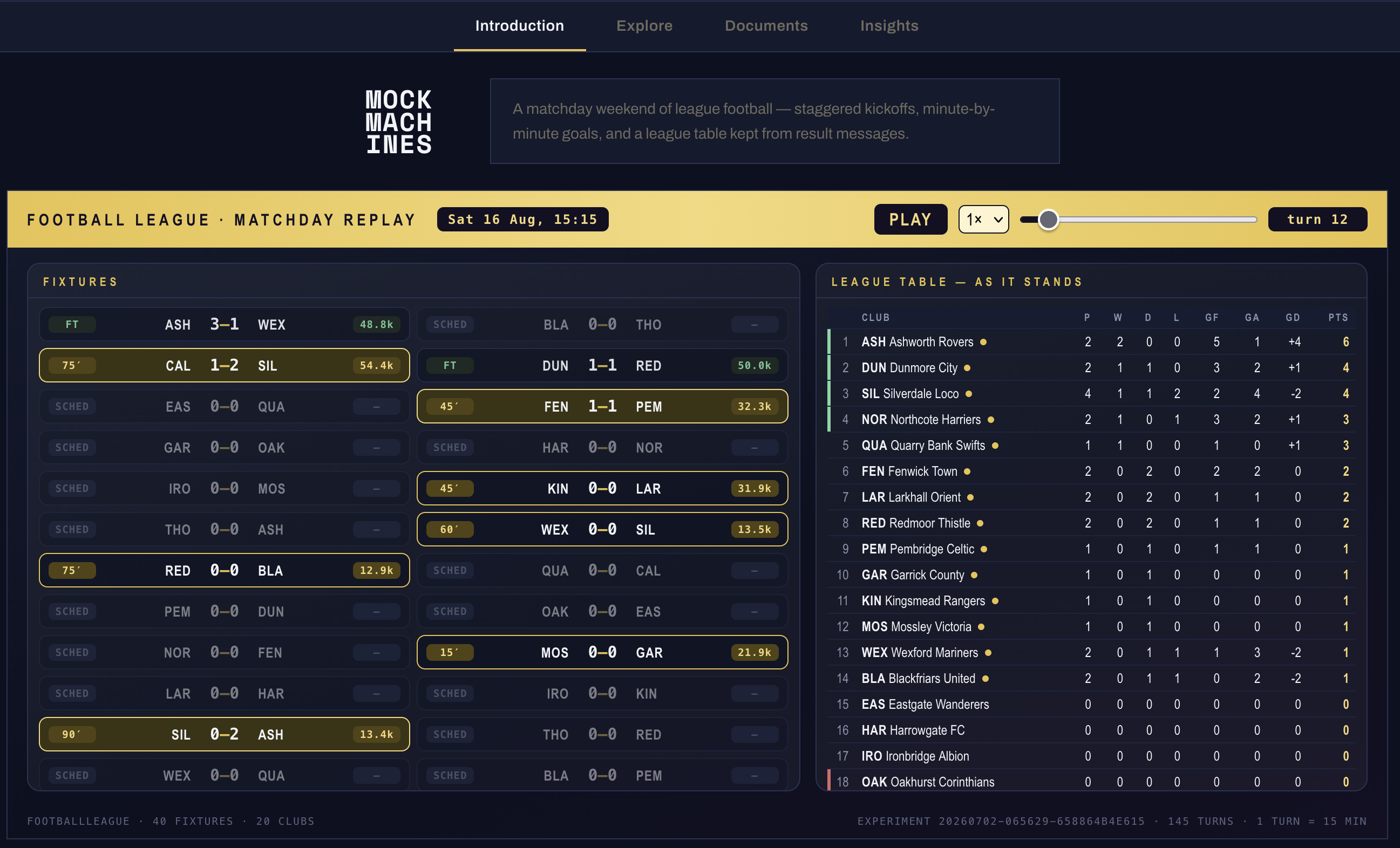
- A BDR working an account alters the demo to suit their prospect. They tweak the org structure, fine tune the workflow steps, and create branded materials like a mocked up invoice or branded insurance claim form – turning their research into eye-catching messaging.
- An engineer picks up the demo, and already has a working backend or dataset they can use for a tailored demo. Working off an existing dataset is a huge timesaver.
- The account team shows up to the first meeting not just with a customised presentation, but a full demo of what their product could do in that customer’s environment.
- The prospect leaves with a working prototype that they can play with, share, and discuss with colleagues even when you’re not in the room.
Today, most GTM teams rely on a small number of people building the custom demos, or accepting that a small number of opportunities gets the fully custom treatment. A larger number of calls tests the tap dancing skills of the demonstrator to adjust the canned talk track to the meeting agenda.
If that seems familiar, and you have deals where a tailored dataset, backend or branded visualisation could help you close: check out Mock Machines.